
The CPG Guys
CPG industry icon Sri Rajagopalan (Papa Raj) & consumer loyalty guru Peter V.S. Bond explore today’s consumer, brand management, retail media and the in store model. Today’s environment is transforming fast with technologies like Artificial Intelligence and a social media engaged consumer. Our guests are CMO, CCO, CEO, founders, Martech, Retail merchants, Retail media networks. Join the discussion, be part of the solution. http://cpgguys.com
The CPG Guys
Live from Groceryshop with Coca-Cola's Simon Miles
Use Left/Right to seek, Home/End to jump to start or end. Hold shift to jump forward or backward.
Simon Miles, VP of Global Omnichannel Customer Platforms at the Coca-Cola Company joins the CPG Guys in conversation at the recent Groceryshop industry conference in Las Vegas Nevada.
Follow Simon Miles on LinkedIn at: https://www.linkedin.com/in/simon-miles-727290/
Follow Coca-Cola on LinkedIn at: https://www.linkedin.com/company/the-coca-cola-company/
Follow Coca-Cola online at: https://www.coca-colacompany.com/
Simon answers these questions:
- Retail media is a fast changing landscape and finally we have IAB talk to standards? Would love to get your opinion on the reality of standards - is this good and realistic?
- Data has become a monetized platform for retailers. Some scaled data represents consumer habits, some is very retail centric movement, kinda making the syndicated data world less relevant. What’s your thought on retail centric data that now is all over the industry?
- Retail media proliferation - again everyone has a platform, and even in store is now a part of retail media. Do you see this continuing or will there be consolidation - surely brands cannot be shaping strategies on media with 50 retail media engines and retailers?
- Talent - simply put what makes a good digital or omnichannel leader. Both Sri and you come from the brick & mortar world and adapted to digital and go back and forth all the time. What’s the mojo?
- Take us through your thoughts on planning as it relates to commercial strategy - when annual plans are built do they have to now be built for retail through an omnichannel lens, or is brick & mortar driving it and digital is a bolt on to cover the gaps?
- Metrics that matter - give us your views on what metrics matter in the digital world, for eg does content scorecards 10 years into measuring it even many anything?
- How is Coca-Cola evolving in how it collaborates with retail customers around omnichannel and is digital a core component of the joint business planning process?
- The last question on the CPGGUYS episodes is always fast forward - what’s next for you and for what you do in role at Coca-Cola? What trends are you following that you think are non - negotiable for our industry?
CPG Guys Website: http://CPGguys.com
FMCG Guys Website: http://FMCGguys.com
CPG Scoop Website: http://CPGscoop.com
NextUp Website: http://NextUpisnow.org/cpgguys
RetailWit Website: http://retailwit.com
Rhea Raj’s Website: http://rhearaj.com
Lara Raj on Instagram: http://instagram.com/lararajj
DISCLAIMER: The content in this podcast episode is provided for general informational purposes only. By listening to our episode, you understand that no information contained in this episode should be construed as advice from CPGGUYS, LLC or the individual author, hosts, or guests, nor is it intended to be a substitute for research on any subject matter. Reference to any specific product or entity does not constitute an endorsement or recommendation by CPGGUYS, LLC. The views expressed by guests are their own and their appearance on the program does not imply an endorsement of them or any entity they represent.
CPGGUYS LLC expressly disclaims any and all liability or responsibility for any direct, indirect, incidental, special, consequential or other damages arising out of any individual’s use of, reference to, or inability to use this podcast or the information we presented in this podcast.
Sri (00:00)
Hello and welcome to this episode of the CPG Guys Podcast where we explore the omnichannel digital journey of both brands and retailers. I'm of course your co-host Sri. listen to my daughter's music at www.rhearaj.com, r-h-e-a-r-a-j.com. I just learned at the time of this recording at grocery shop in Las Vegas, and that's why Bryan has this strange pyramid behind him.
Bryan (00:20)
The Great Pyramid of Geezer.
Sri (00:24)
We just found out that my daughter's actually recording at ABC today in Bakersfield, California. And also follow the exciting adventures of my younger daughter who was part of the Dream Academy by Hybe and Geffen Records, anchored with Universal Music Group on YouTube or Instagram. And joining me today is my co host and friend, the managing director of Retail Cities North America and host of the Gildenberg Army Comment and the CPG guys fast forward, Mr. Bryan Gildenberg.
Bryan (00:49)
I'm doing great Sri. I have kids too.
Sri (00:52)
So let's talk about
Bryan (00:53)
Well but they're not doing anything anywhere near as impressive. So let's
Sri (00:56)
Go ahead.
Bryan (00:57)
my my my fifteen year old kids are doing great in high school. They're killing it, so
Sri (01:01)
Bryan is actually managing director of retail cities North America and host of the Gilden Bragami comment and also the Fast Forward. You notice how we don't talk about Sri's job, instead we talk about the
Bryan (01:11)
Yeah, exactly. Yes, so yes, so live for Yeah, that's yeah, we know.
Sri (01:13)
That's where I live. That's what I So
before we get to our guests, let me remind everyone There you go.
Bryan (01:19)
Always living for others. That's what we think.
Sri (01:21)
I like to give back. Once you take the elevator up you gotta send it back down. Our guest is looking at us like can we move?
Bryan (01:28)
That's beautiful, Sri.
Sri (01:29)
You know, you know our guest is busy today. It's a conference. So before we get to our guest,
let
Bryan (01:35)
I'm sure glad we're wasting stuff.
Sri (01:37)
me let me remind everyone, let me talk over Bryan and remind everyone to subscribe to our podcast on your favorite platform. If you use Apple or Spotify, please give us a rating. It helps feed the algorithm and makes our podcast more findable. You want to express how honored we are to be rated the number one CPG podcast for two years running according to FeedSpot, the leading podcast ranking authority, and we're very pleased to have other sister casts.
In the top 30, including the CPG Scope, CPG Guys Fast Forward by Mr. Gillenberg himself and the FMCG Guys. And we're happy to be formal sponsors of Next Up whose mission is to advance all women in business. We're giving away memberships to this prestigious network and organization. So drop us a line at contact at cpgguys.com to learn more and take advantage of what Next Up has to offer. Links to our podcast, our sister cast, and our landing page on Nexttop may be found in the digital liner notes of this episode. So we're going to go on here with the main event.
Our guest joined the Coca-Cola organization in 2006, working his way up through the bottling organization, starting as a business planning controller into shopper marketing, then customer account management with iconic letailers like Waitros and Sainsbury in the UK. A decade ago, he entered the digital realm aiming to build transactions through all phases of the path to purchase. In 2015, he assumed the role as global customer director for Walmart International as part of the Coca-Cola Company, and two years ago he was promoted to vice president of Global Omnichannel Commercial Strategy.
Join me in welcoming to the podcast a second time guest, Simon Miles. Hello, Simon. Great to be with you in person today for the record. You are the first and only, if there was such a word, to feature in the show twice in a six-month period, other than Mr. Bryan.
Bryan (03:10)
There you go. So it's great to be back. Thanks for having me back, guys. This is this is your fate in the future. You'll be s you'll be sitting in front of a pyramid making terrible trips.
Sri (03:18)
or you might become a co host of the C P G class. You have to pick which one you
Bryan (03:21)
Perfect. I'm the ghost of Christmas future. So
Sri (03:24)
Before we get to the questions that we have prepared for you, Simon, would you give us a description of your role at Coca Cola?
Simon (03:31)
Yeah, I mean I feel like I'll say I've got a couple kids because you know this is how you guys started. So hey, you know, you know, they're in thirties and twenties now, so they're getting out tomorrow.
Bryan (03:39)
Pretty good.
Sri (03:39)
Well
Simon (03:41)
living both in the UK. So you know, but successfully leading, you know, adult lives, which is great when you're right. Job done. All good.
Bryan (03:48)
I look for I look forward to that.
Simon (03:51)
yeah, so my my job title, it's a shocker. Vice President Omni Channel, customer platforms at Cokes, like the longest job title ever.
Essentially it sits as part of our global customer and commercial leadership role. So I look after all of the the work we do around the world with the kind of the the big obvious players like, you know, Walmart and Amazon and others. but also in areas like food service, so you know food service aggregators as well as the growing area of B2B. So, you know, we get involved in that and then internally it's kind of you know, capability building and that kind of stuff as well. So it's pretty varied.
Sri (04:27)
And we're gonna get to some of those which you couldn't last time, like food service, I'm sure that's gonna come up in our conversation today. Thank you for that overview, Simon. As a reminder to find the first episode of Simon, simply go to your favorite listening platform and type Simon CPG guys or on cpg guys.com. Search for Simon on the all episodes link, which is on the homepage. In the digital line of notes of this episode will of course include links to your LinkedIn profile, Simon, Coca-Cola's LinkedIn page and the website of course for our listeners.
to access while we go on with our conversation. So here's number one, without further ado, without fail, I'm gonna go to CPG guys' favorite topic and you're the right guy to answer it. Buzzword of the year, buzzword of the last three years, retail media. Fast changing landscape. And we finally, finally, finally, we have IAB talking about standards. In fact I think something was put out there a few days
Bryan (05:18)
Yeah, this just Wednesday. It was at the IAB Connected Conference. Connected Commerce Conference in New York, also my birthday.
Sri (05:25)
We know. which is of course a Wednesday back in September.
Bryan (05:29)
Yes.
Sri (05:29)
But we'd love to get your opinion on the reality of standards. Is this good? And is it realistic that we can expect retailers to actually comply with the standard of how to measure success?
Simon (05:39)
Yeah, well let's alpha.
Let's take those in two separate bits. Yes, it's good. Yeah. very clearly it's needed, right, by the industry. We've been talking about this for for a long time, I think. You know, all of these networks are growing up, you know, in their own way and there's they're all very different. And so it's really important, I think, for us as an industry to get to some sort of standardization. This isn't probably the answer yet, right? But it's a really important addition, I think, to the literature in this space. And the reason I think we need it is because it's really hard, isn't it, to set objectives if you don't have an agreement on
How you gonna measure it? What what do the measurements actually mean? And so I think you know that desire to to fulfill all the all the great forecasts we're seeing about how much revenue is going to go over the next few years, unless we get some kind of standardization, that's not gonna become a reality. that we can't grow sort of sustainably as it were. and so I think it is really important that we get this kind of common language in place. Realistic, I would say let's wait and see, because you know we've got to see it being
taken on board I think by a number of retailers to so that becomes the common currency. And obviously it's very early days, so we're not we're not seeing that yet. But it's one of the reasons why, you know, I think industry events that you'll see this this topic coming up are really important because it's an opportunity for us all to discuss it and kind of get more alignment. So yeah, I definitely think it's a good
Sri (06:56)
What about the reality aspect? Do you think we're gonna get there?
Simon (07:00)
I do in the end I do think w because I think we have to. Because I I I think, you know, to the point on if you can't measure it consistently or accurately, that in the end will turn the tap off of funding. if people can't get to return on investment in a comfortable way and be able to compare against other forms of media, then you know, there's an incentive there for everybody to get on board at some point.
Bryan (07:22)
Be interesting because you've got a global remit on this too, right? So my hypothesis is that in a rational marketplace, buyers tend to dictate the standards of the market, right? Because they're the ones with the money. So it's only in an oligopolistic marketplace that sellers set the terms of the market. So there are re there are markets in the world like the US where there's eight million retail media networks, right? So my my kids opened a lemonade stand, they have a retail media network called Gravel Net. We're all very excited about it. but there's but in a market
like your homeland of the UK, where there's essentially five. I wonder do you think that that standards conversation will evolve differently in a market that's structured differently than the US?
Simon (08:01)
It's an interesting one because it I think inevitably it will it will develop slightly differently at probably a different pace. Yeah. there's clearly a very strong imperative to get there in a market like the US where you have so many different networks that the proliferation is a nightmare trying to manage this space. So that's what's driving to to some degree the standardisation. Probably less urgent in in a market like the UK as you say where there's only a handful of players. But nonetheless, you know, you you still need to be able
As a brand owner, you you need to be able to take a look across these networks, compare one to the other, what it's offering, and not just across the retail media networks, but across media networks in general. Because if you've got $100 to spend, and at the minute you can spend it in so many different ways, whether that's you know TV, outdoor, you know, Google, Facebook, you name it, as well as these new new kids in town, we need to be able to make those decisions. And it's if we don't get some element of comparability, it's very difficult to make the investment.
Bryan (08:55)
Well, and it's interesting too because for so long, I mean, Kara Pratt as Kara Pratt's been saying that retail media isn't is Kara Pratt that from Crogsman saying retail media is media s for so long. We're gonna make her t shirts with some the CPG guys that she can give out that say retail media is media. There's there's a flip side to that coin, to quote Robert De Niro from Heat. The flip side is is the minute you become media, no matter how oligopolistic your market position is in the retail world, you lose your oligopolistic position as a media player, right?
Even Tesco in the UK is a massive retailer and a big part of the system. But if they're now compared to IT V and Google and all the other things you can advertise on, they've gotta be more standard because the money if it's media, money can move between between better understood media platforms and retail, right?
Simon (09:41)
Yes, and that comes down to the scale of your ambition, I think, as a retailer. If if if you're happy to be just shuffling money around between trade budgets and shopping then
Bryan (09:47)
Yeah, that's it. Yep.
Simon (09:49)
knock yourself out. Just, you know, stay in your own really
Bryan (09:51)
Have a blast.
Simon (09:53)
want though to to get the the notion that we're we're all kind of, you know, realising is the promise of this thing, which is there's there potentially is incremental spend that goes into a retailer P and L at some point, then you you you're gonna have to change the game and think a bit bigger, I think. Right. So so I think that's a different, you know, different case.
Sri (10:09)
Bryan, before you get into the next question, I do want to check with you, Simon, your opinion of this very retail media thing that we just discussed in so many different ways from measurement to possibly hitting the retailer P and L in a positive way, for retailers, etcetera. If you're a brand, is a marketing mix the right answer to how this should be solved?
Simon (10:35)
not only. I think I think the the trick here is this is a different type of animal than we've seen before because of the proximity to the point of purchase and because of what you can do with it commercially. yes, of course the marketing mix argument is part of it, but actually the real strength of this is being able to join the dots all the way along end to end, I think, in your in in your organization. So yes, it's about landing some of the things that we want from a a media and a marketing point of view, but it is also about how we drive transactions in a in a way that we just haven't been able to measure the impact.
of that previously. So you know, I don't think you can you can apply previous rules, if you like, into this into the retail media. It just is a different beast. It's much broader than it has been before. So, you know, it's a it's a conundrum that we're all wrestling with as to and and I'm sure we'll come onto this later around objectives and things is it it it'll depend on what what brand you're talking about, what your objectives are up front as to what data is really important.
Sri (11:29)
Finally on that very topic, I'm s this question is going on forever, I'm sorry, but you can tell it's a favorite and the hottest topic today in the industry. Who should budget for it? Is it does it belong to trade and therefore commercial sales folks? That's the industry I've grown up in. And I asked you the marketing mix model, 'cause or should it although the mix these days includes trade and carves it off as a round number, does or does it belong to marketing or should own it as a media plan?
Or is it just a plethora on a mix and it's gonna be different for everybody?
Simon (11:59)
I think for a probably I can only speak to the bigger organisations on the CPG side, right? Where you do have at the moment a situation where there are lots of different budgets involved, you know, from you know obviously the brand budgets, the media budgets, shop and marketing budget, trade budget, account budget, you name it, there's probably others. and the way that I'm thinking about it at the moment is you need to be connected but not integrated. So it's very hard for us to make it sit in one place. because of the nature of this thing doesn't
lend itself to being categorized as one thing. And so what we're trying to do is is break down the silos in the organisation, plan much more transparently together so that the impact is is there for all parties, but the budgets may well end up still sitting in the same places they had. But they you know, we're planning together in a much more transparent and open way of before.
Bryan (12:47)
Yeah, trying to trying to modify the things that can be modified more easily rather than trying to uproot things that are 'cause the minute you start trying to uproot trade budgets and move money around, then you get in the US you get into Robinson Patman conversations. And and anybody who wants to defeat change can call a lawyer. Just basically like call it's like phoning a friend who wants to be a millionaire. Yeah. So you can basically solve the problem that way. So I think I think changing the workflow rather than trying to change the buckets.
Simon (13:11)
That's the way I'm thinking about it. Otherwise y you're absolutely right, this sort of sales prevention department will come in and just say no.
Bryan (13:17)
Standing. So as we think about other things that retailers are both providing that are valuable, but they're also using as a sort of an economic engine, we get to the topic of data, right? So data's become a monetized platform for retailers. Coming from the UK, I know this is a new concept for you. So since the UK basically invented this 30 years ago, thank you to Edwina and Clive. There's a lot of data available, obviously. You've got data around consumer habits, you've got data around retail transaction data, both digital and physical. You've got shelf.
You've got digital shelf data. How are you thinking about all this? Like, like what do you tr what do you do with all this data? And then especially again in a global role, you know, as part of a global digital share group last week, where we were talking about this with a bunch of people that have a the global e-com role. And just the complexity of trying to get digital shelf metrics coherent across markets so that everybody's kind of aligned against them and that people aren't poking holes in them.
But just the amount of work that goes into that is pretty significant. So how do you think about
Simon (14:18)
Yeah, it it's huge. I mean I I personally I welcome the sort of re retail centricity of of that data because I think the more we get to that, the better. And and the reason I say that is because the real strength of this, potentially if we get this right, is is the how actionable it can be. Because when you think about the sort of the problem we have with aggregated data and panels and stuff historically is it's actually quite hard on a when you're sitting in front of a individual customer in an individual market who really wants to talk about what's happening with their shoppers in their stores. Right.
If you can get to the point where you're using the retailer specific data for their platform, I think you get yourself in a much better place where you can actually change the things and optimize what you want. Right. and so it is difficult because you you obviously need some kind of a umbrella kind of viewpoint or strategy. But I think how you execute that I think has to be cut.
Bryan (15:06)
The way you express that was really interesting. I never thought about it that way because this is the only retail media is the ecosystem in which the seller of media has not a vested but a like a wholly naked interest in where the thing is actually bought, right? Like, you know, NBC doesn't care where you buy a product, but Walmart media really does. And as a result, the specificity of outcome in that network is not just a value add from a closed loop measurement point of view, but an essential part of the planning process.
Simon (15:35)
And it it's the other part of the upside that that doesn't get spoken about so much. There's the obvious revenue stream from buying the media in the first place, right? Which which you know everybody understands. But there's also the upside that if if we get this to work, what you're potentially driving is, you know, basket incidence, basket sizes Yeah, exactly on a consistent basis, right? And so for the retailers is double the reason why you don't want to get to that attribution and the accuracy of what you're doing and to utilise the retailer's specific data.
Sri (16:02)
You thought we were done with retail media, didn't you?
Simon (16:05)
no. I've heard you guys before.
Sri (16:06)
So
Bryan (16:07)
The trip.
Sri (16:08)
retail media obviously is a proliferation in the markets that you've seen globally. There aren't two hundred retailers with retail media ecosystems. There's probably five powerful ones, four powerful ones. Yes. Some cases like Canada, maybe three. In this US market, it's just a proliferation in this. Every retailer seems to have one and now even in stores are part of that retail media network. It's this.
The future we're gonna experience as brands or will there be some sort of a consolidation because surely brands cannot be shaping strategies on media with fifty retail media engines and retailers to be able to build a successful marketing mix model of any sort.
Simon (16:51)
Yeah, I agree I agree with that. I think, you know, there's already hundreds of these things, right? And that's just not a sustainable model for us to be buying into you know an individual market hundreds of of networks. So I I think the way it's gonna go is there's gonna be three levels to it, I think in my head. One is and the obv the most obvious one is is the the strategic big scale one. So, you know, Walmart, Amazon, those kind of guys, right? You've just got to play with those. Right. and they offer a lot of scale and a lot of capability and so that that is a kind of yeah, that's a that's a given.
I think there's also another group which is those that have some some kind of niche capability or targeting capability or audience that you might want to buy into. And if you just step outside a grocery for a minute, you know, if you're selling don't know, Ferraris or you know, Rolls Royces or something, and someone had a network that was for people who owned yachts, you know, you might be interested in that. So so there's gonna be some kind of more specifically targeted networks which will exist on their own.
And then I think there's all the rest which, you know, probably don't have the scale or the capabilities of the big guys, don't necessarily have any particular angle on who they're talking to. Right. That's got to be an aggregated solution in my mind over time. Yeah. So in order to make it manageable that we might want to buy in on an aggregated basis because it's, you know, it might have scale at that point, but there's no way we're going to go in and buy against five hundred of them. It's just not
Bryan (18:10)
Well, no, it's I mean, as I I have a slide that basically th that media buyers are interested in audiences that are one of three things. Big enough that they can deploy their own audience definition within it and like not have to worry about anything, to your point, distinctive enough that it could serve as its own useful audience, even though it's small. It's a meaningful enough audience that can use that. So if an artisanal cheese producer in Vermont, Wegman's audience is going to be of real interest to me. It may not be of interest to everybody, but it would be of interest to me.
And if it's not big or distinctive, it's gonna get ground up as programmatic feedstock unless it's aggregated, right? So because it's going to get aggregated one way or the other. It's either going to get aggregated in a way the retailer likes or it's going to get aggregated in a way that they don't. Yeah. So and it's going to be like all the terrible websites that like, you know, everything you link to that's got ninety-seven million banner ads on it that are all I mean that's what this is gonna nice. Yeah, this is I but that's and it's gonna cost that much, like, which is nothing basically.
Simon (19:04)
Yes, exactly. And there and that's that cost to serve is an important one because you know you that's why you have to simplify it in the end, because otherwise it just it would just cost too much to to actually serve.
Sri (19:12)
May I
ask what is your advice there for the brands? Should they be if they work with a hundred partners, should they be considering investing on all hundred?
Simon (19:21)
No, I think a hundred's too many in any individual market. I I think you have to be more selective than that. I think you have to think really hard on what your objectives are, whether it is about reach and scale and therefore that lends itself obviously to bigger players, or whether you've got a specific thing. If you are an artisan cheese maker, then you know you need to know where you need to play.
Sri (19:37)
It's gonna defend by the brand and basically and
Simon (19:39)
Massively individually.
Yeah. I think the only poor devils you might have to deal with with a lot are people who are in my type of role. Because if you think about a brand like Coke, right, we're we're very locally market driven. And so when I have a global remit, when I'm thinking about say, I don't know, top twenty markets, each one of those markets might have three or four they want to play with. And so the aggregation for me and my team is we might have to think about, you know, fifty of But I'm not the one who's actually kind of, you know, doing the day to day work.
Sri (20:07)
Not done yet, I'm sorry. So the the one last thing I wanted to ask you in this space is because you're touching capabilities in this space every single day and I think it'll be great to hear your viewpoint, especially from a Google Ramit. Do you feel the vendor community that's creating capabilities around retail media, whether it be just simple measurement, dashboarding, all the way to helping with marketing mix, development, is it evolved today or we've still have light years to go?
Simon (20:33)
We've got a long way to go i in in my experience. I think you know it's still relatively new this stuff, really, when you think about it, the way it's exposed in the last couple of years. Yes, they are. So we're what's well the reality of what's happening is there's a lot of spend going in that's not really being accurately measured or capably driven. And that's that that can't be a sustainable model, frankly, for anybody. And so yes, well, I think there's lots of upskilling. I mean that's the thing for me, when I talk to leaders around the the coke world, that's the number one thing that that people are after is how do we upskill the people so that we know
you know, how to measure, what we should be measuring, how do we plan it, how do we work together, you know, how do we assess these networks capabilities? How do we take the conversation with the customers? Should we put it in a J B P all these things that are floating around that actually the skills and capability are being built as we speak, but we're we're nowhere near through that journey yet for sure.
Bryan (21:20)
that actually gets to the the actual next question which is which is w which revolves around talent. So you've talked about the s some of the specific skills involved in what you need to be able to do. And I like the fact that there were some hands-on keyboardy skills in there, but there's also how do you how do you work the stuff into a joint business plan? Like how do you how do you approach it differently? And I guess I have two questions within here. well one, you know, all three of us basically started our lives in the brick and focusing on the brick is brick and mortar world you two as practitioners, me as an analyst.
so how do you look at the evolution of that and I guess balancing balancing the digital world's need for digital capabilities plus the need to understand just commerce in general, yeah. I w I was often fond of saying back in the day that the only the only number I know about e commerce that's correct is that eighty nine percent of the letters in the word e-commerce are commerce. So that's the only thing I know with certainty. So and having people with real commercial understanding to balance the digital stuff is good. But but just generally
What are the attributes that you're looking for from an omnichannel leadership point of view, just in general? But I think also it would be interesting for a global team. Like what are the skills that you think are different for a global team versus an in-market?
Simon (22:30)
Yeah, it's a good question because you know, if I talk about I I've been involved for a ten of years or more and and I've always had the view that that the really good people who work in our space actually they don't get distracted by the technology. Because there's there's always a shiny toy, there's always the latest thing coming down the road, right? And and I think if you build your plans around w where the technology is, you're gonna make a mistake. That's not gonna be a sustainable plan. So
Bryan (22:55)
Your
your your metaverse store is a kick and butt?
Simon (22:58)
Yeah, how much how much groceries you buy on cryptocurrency these days and NFT. I think it's it's really about people, not technology. And it's the pe it's the individuals who can think about the consumer and the shopper first and not worry about the technology so much. The technology is there to serve the thing we're trying to help the shopper or consumer do. Right. And so that and that's not everybody can do that. I think a lot of people come into our space thinking tech, tech, tech and gadgets and shiny toys and stuff, and that's obviously part of it. You have to understand it. But I think
For me, particularly when you think about the the global teams and the the perhaps the more senior leaders, there's there's two words which always keep coming into my mind. One is you need to be someone who's a bit of a translator for your business. Because this outside world is constantly changing, there's new stuff coming in, not all of it is relevant for your business. And you have to be the person I think or the leadership group that goes, okay, we understand what that's about, we understand where that trend is going, and
Actually here are the three things we really need to think figure out in our business and what we need to do. So you need to translate that outside world to the inside world for your for your own organisation. I think that's one thing. The the other one that keeps coming up is you need to be an evangelist. You need to be the one in your business who's valued.
Sri (24:10)
Difficult to do.
Simon (24:10)
Yeah, it is difficult. It's not it's not easy.
Sri (24:13)
Especially
when you have a lot of hardcore trained brick and mortar folks and I've experienced this prior to the role that I'm in today for close to a decade where the brick and mortar folks would always say, Keep that away, keep that away, our merchandiser is not interested. Right. I don't believe that's true though. I
Simon (24:30)
I don't believe it's
Sri (24:31)
mean now in my current role I see that every day.
Simon (24:33)
Yeah. And I and I'll tell you what the way I think sometimes p you can start to change people's mindsets. When when they look at the business and say, Well it's only ten percent of my business now, ninety percent of it is store based, so I'm gonna focus on the ninety. I get it, right? But particularly if you're starting to think forwards in terms of your planning, how much of your growth is gonna come out of these kinds of stuff, right? It's forty to fifty percent if if your base is ten probably.
Sri (24:53)
In some cases all the growth.
Simon (24:55)
Yeah, exactly. So if you ignore that or you don't wanna tackle it, you don't want to build the plan the right way, you don't wanna consider that side of it, half your plan's gone. How are you gonna hit your numbers?
So i you have to I think, you know, we're increasingly in a space now where you just have to build that in. and so that evangelist kind of role I think is really important for omnichannel leaders to
Bryan (25:14)
of things that are interesting that I think the evangelism is one it's and obviously given given your old job at but running the being a global account director basically for Walmart, right? So I spent most of my life with people with that job. So like but going way back to Bob Tufts in the nineteen so yeah there you go. So yeah well then yeah then Julie when Julie Hamilton had that job and stuff yeah yeah well these are all this is the
Sri (25:39)
Actually I know these names. Do
I qualify for geezer?
Bryan (25:43)
This is yeah, the yeah, I am now qualified for the Great Pyramid of Deeers. so these are all people that had the the Simon shop before Simon to come. The that job. And from a global account director point of view, there was so much there around capability transfer and best practice understanding and all that and f commercial firefighting. But that role generally never got the bandwidth to be able to really get after opportunity as much as you would like. I think from from in the role you have now, this idea around
the evangelism and the it's ten percent of your business but it's fifty percent of your growth. The ability to tie that evangelism to commercial outcomes, I think, is one of the things that we're starting to see best in you know, best in class companies figuring out, which is how do I take the commerce part of e commerce and really turn it into what's the opportunity, not the problem.
Simon (26:29)
Yeah, and I think particularly if you type to the first thing I was talking about, which is it's about people, not technology. So it's not just about the tech stuff, it's about you know, actually the way shoppers are shopping is changing. Yeah. And therefore that's the bit you plan and some of that's gonna be in stores, some of it's gonna be off platform, some of it's gonna be i in the e com environment. You need to just be thinking about that as one thing and planning that accordingly. So
Sri (26:48)
Simon, can I flip it on the other side of its head and ask you the reverse question? These evangelists, the digital evangelists, they usually come with a hardcore digital training. And they are the ones who look at brick and mortar and call that dinosaur prehistoric and they often look down upon that channel completely. I see both sides of the fence struggling with each other. You got the hardcore brick and mortar veterans not wanting to touch
digital with the fifty foot pole, but on the other hand you have the digital evangelists who look at that side of the fence and dinosaur and that's not correct either and the evangelism will only be so successful unless you take time to understand the other channel.
Simon (27:27)
True. Correct. yeah, I couldn't agree more. you know, store I've never subscribed to the view that store's gonna go away. Th it's always gonna be an important element of it and probably the majority
Bryan (27:37)
Not in any planning horizon that anyone cares.
Simon (27:39)
I'm gonna be well retired before that it would ever become a you know a possibility. So, you know, we we have to recognise that i if you really are people centric and you really are consumer centric, that's where the bulk of people are gonna do the bulk of their grocery shopping and therefore the stores are vitally important not just as a as a experience and but you know, fulfillment and all those areas. You know, if you you take about most of the omnichannel, the big grocery retailers, you know, the the story is absolutely front and centre in terms of being you know part of the fulfilment model.
as well as, you know, being reinvented as a destination, as a as a way that people want to experience certain things. And particularly when you start to throw, you know, further forward I think, I can see a time in which we really do have to reinvent the store and you'll see s a lot of different retailers are sort of start to play in this area to make them much more experiential, much more enjoyable places to spend time, frankly. Rather than just, you know, charging up and down a few aisles with a car. That was never much fun.
Sri (28:36)
Let me remind our audience that I'm speaking today with our repeat guest, Simon Miles from the Coca-Cola Company. So take us through take your thoughts on planning as it relates to commercial strategy. When annual plans are built within a brand, do they now have to be built for retail through an omnichannel lens? Or is it still pretty much a top down plan on brick and mortar driving in digital is just a bolt on to cover the gap?
Simon (28:59)
Has been in the past for sure. That sort of you ninety ten thing that we were just discussing, I think, manifested itself in planning so that all the planning went into the store plan and then it was like, yeah, I need a couple of slides on the on what the digital plan looks like. Clearly, my view that that's not the right way to go. We've got to be s much smarter at at doing that because of the growth potential in it. And and we have a a phrase that we use a lot at Kirk, which is around being consumer centric but customer back and customers for us being you retailers and and QSRs and so
and so, you know, we build the plans with the consumers in mind, which was the point, you know, we were talking about earlier, which is irrespective of the channel they happen to shop in at any point in time, and then you build back the right plans then that fulfill that for the customer as well. and and it's interesting for us because we we've historically there was one of our former chief execs now called Robert Woodruff had a famous saying which he coined which was within an arm's reach of desire. That's what drove, you know, a lot of the distribution led growth of making sure that availability was king.
for the success of cocaine. It drove us for decades and you know still does as well in many places. You think about the modern expression of that, it it means that you have to be present on, you know, all the digital devices that we all own, as well as stores, right? We just need to be there. We need to be present. And availability, whatever that means today, is what should be driving your planning and process so that you're thinking about that right the way through. And so for me, we we probably had some plans that were disjointed, right?
So built for the stores and then you bolt on the couple of slides. Then we were a bit more connected, I think, in the last few years, where we were we got better in certain places certainly at saying let's let's build this as one. We've got to get from connected to integrated. That's gotta be one plan that just very well said.
Bryan (30:43)
Yeah. And one and especially now that you've got like a media joint business plan as well, which is an entirely different animal. So and shameless plug, but November sixteenth in Chicago, the retail city side of my life, we're running an event called double jointed planning where we're trying to bring together the teams that build media plans and the teams that understand commercial plans and try to get them to talk to each other. So it's either gonna be great or a colossal failure. I can't really tell which
Simon (31:05)
But it's great you're doing it though.
Sri (31:07)
At the time this podcast is aired we'll know.
Bryan (31:09)
Yes, that's true. So we all deter we all determine, so
Sri (31:12)
Let's make a commitment that in mid December you'll talk
Bryan (31:15)
I will t I will tell you whether it was a whether
Simon (31:17)
One of the tricks there, Bryan, you sort of think about that integrated planning and the way that particularly when you start to talk about media as well, I it's it's hard enough just writing a kind of business plan around you know, sales plan if you're looking for a customer. If you start to bolt the the media stuff on because the cadence is so different. the way it works. That's that's such a big
Bryan (31:34)
So you'll get a kick out of So when I was an Omnicom, we ran shopping marketing for a bunch of clients. So got a call from my media team. March. They're like, well, you know, we're really trying to activate, you know, we're gonna tie together with the store. So we're we're really trying to, we really want to do something for Easter. I'm like, of what year? Yeah. Yeah. But boats kind of sailed on the Easter that's in
Simon (31:53)
How many spots do you think are available?
Bryan (31:54)
weeks from now. Like maybe we should have, maybe we should have thought of this like I said, I assure you right now that someone in your company is planning Easter next year. Go find.
So so go find the commercial person that's building the twelve month out plan for this c yeah. It was a very large customer that
Simon (32:09)
The other thing I often get in a similar vein is well we don't know what the plan's gonna be next year. What and I'll say, Well I can tell you what the plan's gonna be, right? So January's gonna be New Year, New Year, then it's gonna be you know Valentine's Day, then it's gonna be Easter. I'm just going to the summer programme, and it's gonna be some kind of big sporting event, then it's gonna be back to school, then it's gonna be Halloween, and we're gonna be in the holiday season. What else do you need to know? We can
Bryan (32:29)
And it is interesting too because I
think this is one of these like when you talk about cats.
Simon (32:36)
So let's work around that as a start.
Sri (32:41)
I'd love to have a calendar of cats I
Bryan (32:43)
I think and we should we should have a CPGS cat calendar. but when you think customer back. I'm
Sri (32:48)
Three cats in case you're wondering.
Bryan (32:50)
not allergic to any of them, fortunately. The the when you think customer back, it's one of the things I've was talking to quite about the other day, it's like, well, look, I don't know what you think happens here. Well, it was the marketing side. The longest cycle thing you do as a company, apart from RD, is build the Walmart Planet Grand. That's actually the the furthest out stake in the ground you have about demand creation and conversion as a business.
Is your Walmart planogram? So your quote unquote long term marketing plans, your innovation plan is like a bunch of spaces held on the Walmart planogram sixteen months from now. You don't know what that innovation is yet, but you're holding space for it. Because you convince them to do that. But like the the whole notion that you can run a marketing calendar six to eight months out and liaise that to a retailer's fifteen to twenty four month calendar is always been kind of challenging, right? And now it just gets exacerbated when you're trying to tie media.
Simon (33:41)
Yeah, it has. I mean I used to run the shop and marketing team when I was in the in the UK business. Yeah. and and it was the same challenge. Exactly exactly that. And I ran the category team, so you you saw a different side of Right. So so you're upset, right? All of these kind of different elements which go
Bryan (33:52)
The
market is drawing the innovations on the train to on the train on the train up to Chesant.
Simon (33:58)
I've done that. Yeah. so y you know, that so all these departments have all got different kind of timelines they're trying to work with and and to get a really integrated plan is I know we're kind of semi joking about it, but actually the reality of that is fiendishly difficult yes for for big organizations. There's good reasons why they work to the timelines they already do. Yes. But actually if we're gonna really join these things up and be very powerful in terms of the way we can we can influence consumer behaviour, then we got we we g just gotta think differently and it's it's gonna take a while to get there. It's it's a big beast to chat to take on.
Bryan (34:25)
Well now that we solved that easy problem, let's move on to another easy one. So, so peace in the Middle East with our pyramid. No, how do you think about metrics that matter? Like what's what does that phrase mean to you? How does that come to life within your organization? And how does like a global team then connect the measures that you use that matter to the measures that you know matter to the markets? How does that connectivity unfold?
Simon (34:52)
Yeah, it's a tricky one this. you know, because that's why I asked it. Yeah, in s in some ways we've got more data than we know what to do with, and in others we we don't have any data. Right. So i i and I think this is true for most organisations, the way I would answer it is it it really needs to start with being clear on what your objectives are. Because we can chuck a load of data at all sorts of things, but if we're not very clear on what it was we were trying to achieve, we're probably just gonna get a bunch of numbers and no insight. Yeah. And you and you see that you know repeated time and time again.
And and the reason I sort of stress that is because with a portfolio like we've got, we've got tons of you know, diff brands in different stages of their lives, right? And so if you've got a relatively new brand that's trying to establish itself, you'd wanna build out some metrics which talk to things like, you know, you probab building awareness at the very basic level, right? But also, you know, new to brand and stuff as we're starting to get smarter and and and work with the retailers. So so those kind of metrics that would feed into a brand.
That's at that stage will be fundamentally different to what I might do on a brand like Coca-Cola, which is typically in you know everybody's household at some point in the year. Everybody's heard of it. But actually, maybe what I need to do is get some people who are buying in occasionally to buy in more frequently. And so then it becomes about frequency and basket and you know transactional and all those kind of things. So there's just different you've got to cut it according to what you're really trying to do for an individual piece of work or an individual campaign. And what I see far too much of is people saying,
well really all we want is ROAS and ROI. Uhhuh. And you're like, come on, you know, th it's just too blunt at all, right? You gotta get underneath, you gotta get to the drivers of this. Yeah. Depending on what you're trying to achieve in the first place.
Bryan (36:28)
As a brick and mortar person, it's it's like so irritating because the whole ROAS conversation is like a tradespan conversation from 30 years ago, right? Like you've known through your whole career that the best way to maximize ROAS in a trade environment is to run a really deep promotion, right? It's like which is fine, but and if the only thing you ever wanted to do was to make every individual discrete event you ran the most effective event you could.
Sri (36:53)
If put a deep promotion you can move more un
Bryan (36:55)
Yeah,
it's just it's really radical economic theory here. I'm g I'm I'm I'm submitting this to the Nobel Committee. But there's a million reasons why maximizing individual transaction level ROAS as the only thing you want to do, we've known this in the analog world forever, is a terrible idea. Yes. Like it's a bad strategy that and the digital world hasn't caught up to that yet at all.
Simon (37:16)
N no, it hasn't. And I I think partly b that the reason for that is because, you know, these these networks and things are being stood up and being built in different ways and we're not quite sure on the data sharing agreements and all these kind of stuff, right? So so we're filling in some gaps along the way. And so there was where can you go to? So you end up going up, right? That's something that kind of people get to. But I think we're getting to a place now with with more robustness around the data and more collaboration between retailers and suppliers and sales and marketing and marketing their agencies and stuff, that we're starting to build out a much more
intelligent picture of that that's insights and data driven.
Sri (37:48)
What about measuring some of the basic capabilities? Are we past that in the industry where we no longer need like a content scorecard? Or those things do they still matter to the day?
Simon (37:59)
I don't think they get looked at that much if I'm honest. Not anymore. Not not by the practitioners, but I think I think there's a there's still a a role for them in terms of just being able to drive perhaps some consistency at a more senior level where I I see them getting used more. I think, you know, even a few years ago when I was back in in the UK market, you know, we'd we'd sort of started to move a bit beyond them. Yeah, we'd use it just to communicate upwards and outwards. But for us, hands-on managing the business, that wasn't really the best way to do
Sri (38:28)
Do you all actually look at ratings interviews? Does it even matter? 'Cause the brand is iconic, everyone knows who the brand is.
Simon (38:36)
Yeah, it does, but I think I think there's always interesting bits in there. You need to be always listening to your consumers, no matter no matter what brand it is, how famous it is, how poor
I think that's right. And I and I think, you know, it certainly that would be true for Coca Cola, brand Coca Cola. obviously don't forget we have lots of brands that are still establishing themselves, so there might be a r you know a role for it and it'll flag issues, you know, if you've got product quality issues or whatever it is that can get flagged that way sometimes. So I think any organisation doesn't pay attention to consumer feedback is
Sri (39:08)
Well well said and understood. So now we're gonna go back into that retail media world via the retail question. Shocking, surprising today. How is Coca Cola evolving and how you collaborate with just retail customers around this omnichannel world? when you plan with a customer now is everything approached both physical and digital? And is digital a core component of that very word JBP or joint business planning process with retail media in it?
Simon (39:34)
Yeah, I think it's it's probably different in in different places. So the ambition certainly is to have that all in one place and to be very much more joined up. I think if you just take e commerce for a minute, or commerce, and you think about stores and and online, pretty much everyone we are planning that in one place and that's a joint conversation. and I think that's the right way to go with that part of it. Retail media's come on more lately and I think that's still not quite joined up in terms of how that is and I think
There's some good reasons for that, partly it's new, partly I think one of the big reasons is there are silos both within the retailer organizations and within the brand organizations that make those conversations difficult. and we haven't quite bottomed that out. But you know, the way I look at it is we have an ambition to be the best value creation partner for our customers. And so if we're gonna do that, we have to have that broader view of value in whatever way that that ends up being something we want to to share with
with the customers. So whether that is actually in a conversation about, you know, media and commerce and things that drive the top line, or whether it's things that drive the bottom line, or whether it is things about efficiencies, so supply chain is part of that conversation, you have to have a much broader view of what the commercial agreement and terms between the the organizations are. Digital's been I think it encompassed in that for s for quite a while, but I think you know there's still a way to go, particularly with those newer part on on retail media. And there's an interesting nuance in that, I think.
around J V P specifically which you asked about. And it comes back to this point about cadence and the way that they work. 'Cause for me, I think your joint business plan between a retailer and a supplier, you want the media bit connected but not integrated. Right?
Sri (41:23)
Absolutely.
Simon (41:24)
Whereas we've talked before about, you know, integrated knocking. So because I think you know, obviously there are things that, you know, and trader t
terms of trade and you know planograms and all the rest of it that that get rolled into a traditional JVP, which anniversaries and we know what how that game's played, we've played it for decades, right? Retail media, obviously brand campaigns don't work that way. You know, they come in and out and they've got to be judged on their own merits. And so it doesn't make any sense to roll that into me. However, what does make sense is connecting the two back to the planning discussion that we were having, if you get enough line of sight and enough transparency across the organisation,
You can make sure that when the brand campaign's going live, when the off-platform stuff is happening, you're also lining up stuff on platform and in store to make the the best of
Bryan (42:04)
Well
and this was one of the conversations at the IAB conference last which was when we recorded this last week. it was Mike Myrna from Mars and Mike from Roundell were on stage and they both agreed, you know, Mike more of a media guy than the Roundell team, that the commercial team really needs to own the conversation. And the way I kind of paraphrase back how Mike explained it was was really interesting. I was like, Well basically what you're saying is is that if you let your media agency only handle the media conversation, they're gonna look at it, go it say it that's expensive.
Yeah. But what they don't understand is exactly what you just said. How do you connect it? And basically I said, Well look, you basically have people at the table that don't understand the pro quo and the quid pro quo, right? Like like they just don't know what to ask for back. Yeah. And as a result, they just look at it and say, Well, that's too expensive. I don't want to buy that. And then you end up in a very in a very dysfunctional conversation.
Simon (42:53)
Yes, but it also opens up a the the the opposite of that, which is you have, you know, salespeople say, yeah sitting in front of merchandise have media conversations that they're not equipped to have. So
Bryan (43:03)
No, yes.
Simon (43:04)
there's a massive upskilling thing and and this is where I come back to the whole collaboration thing. So I think I think collaboration is such an important element of the success of this that you we have to collaborate better and differently to the way we've done it in the past. You have to have different people in the room, you have to have you have the ability to to collaborate
w inside the four walls of your organization so that you know sales and marketing are much more joined up that we know really genuinely know what's gonna happen and then we we we commit then to having the right conversations. And yeah of course the the media agency will be be instructed to to come in, you know, and actually do do some of the stuff, but it's that that conversation to your point, Bryan, is is absolutely right. You've got to be s much smarter about how you connect the quick pro quo this thing, because there's lots to gain by doing that I think on both sides.
Bryan (43:45)
Excellent. All right. Well we're gonna we're gonna we've taken up a a fair amount of your time at this point, so we're probably trying to well tr probably try to land the plane here. We're gonna land it in the future, I think. What do you think are the next big things that are coming for you, for your roller coke and just the the the space that you're in? What are some of the next new things?
Simon (44:03)
Yeah, there's I mean there's there's loads, right? But I for me, the really big one at the moment that also gets quite a bit of airtime is is artificial intelligence.
Bryan (44:11)
I
gonna say we we had not mentioned AI yet. We would lose our license to podcast if you didn't mention it.
Simon (44:17)
Thank you.
Sri (44:18)
The over under was twenty.
Bryan (44:19)
Yeah,
that we w we went way over, man. That was that was good. This was like a this was like a conversation about real things. We got bankrupt. This was interesting.
Simon (44:27)
So let me try and land some real stuff in in AI then. So I mean what we're already seeing obviously is is the impact of it playing out s in in some efficiency stuff, in how it's being used sort of more behind the scenes, but also now in front of consumers around things like search. So you look at what Instacar have been doing, you look at what Carfor have been doing. It's changing the way that search kind of is is working, or will do, I think. and I think what you need to think about with it
is is the whole sort of shopper focus. So again, not getting distracted by the technology for the technology's sake, but actually saying how how do we use that capability to to be focused on what shopper shopping behaviour is and where that's going and make sure that we make it you know faster, better, cheaper, easier for people to shop, right? And so the other side of it I think is we will see through the use and and deployment of AI, more task automation, probably more subscription models as that becomes you know more obvious way that people use.
But I think the the flip side of that is if you if you automate a lot more of the grocery shopping experience, what you might end up with is a world in which you have a lot of categories that you probably don't want to spend too much time thinking about shopping, but you sure as heck don't want to run out of the stuff in your home. So you know, cleaning products and and you know if you've got small child in the house diapers, that kind of stuff, right? But the other side of it then is it opens up potentially to be more a more enjoyable, experiential, impulsive, occasion based, driven, you know, shopper focused shopping experience. And I think that's a really good thing.
So I think we're gonna see more of that. But what's even more interesting, I was listening to something the other day about it was a guy talk from MIT talking talking about how he's using AI and he he's an expert in cosmology, right? So he was talking about alligator. But I'll I'll come back to grocery in a minute with it.
Bryan (46:07)
Just stay here. This is
Simon (46:08)
And and what what he was saying was, and he he was using the analogy of when you know the sort of space mission to the moon, right? And he said, look, we had we had to figure out three core areas. One was
Have we got enough power to launch this thing? And it seems to me, if you relate it back to the AI argument around grocery, is we're figuring out the power that this thing's got, right? Have we got what how far is it going to go? Then he said the second thing was if you've got enough power, can you steer it? Right. And and I think for us from an AI It's
Bryan (46:35)
Hit the moon.
Simon (46:36)
like so you're trying to steer this thing. So in our world, that is, you know, how what's the what's the right use cases for it? How does it help shoppers?
How do we work together? How do we collaborate? How do we how do we integrate our plans? All that kind of stuff is is for me is steering the thing towards it. And he said the final thing then was, are you clear on your destination? Yes. In that case, clearly it was the moon. I don't know at the moment that anybody's articulating the destination for AI in its in within the grocery industry. And so I was thinking about this the other day because I really enjoyed that of thing. Yeah, thank you. That that three part thing was quite interesting. I thought, so for me.
And I wrote a very long sentence which I'm gonna read you. which I need to wordsmith down, but I think it contains I think where this phase can go and it it probably applies to e-commerce generally. I think if we get to a place where the destination for me is consumers are delighted to get what they want, when they want, however they want, at a price they are happy to pay from sustainable smart ecosystems that are designed for speed and efficiency, driving economic value for everyone. Right. So
That to me is the reason why we're trying to deploy some of these tools and technologies to deliver a better experience.
Bryan (47:48)
But by the if you want if you want a simpler vertic Costco's six rights of merchandising are basically what you just said, right time, right place, right quantity, right? It is so yeah, so that's right.
Simon (48:00)
But that's where we've got to go with the technology. I think at the moment there's a lot of great work going in, but I don't see yet what what the moon is.
Bryan (48:07)
Right. Well I th well and I think that's a it's a good place to end too because I think just some of the basic disciplines around merchandising, which are actually remarkably consistent when you strip the techno babble away from what you're trying to do online and what you're trying to do in store, there's an actually a s amazing amount of similarity between yes what it is you're trying to accomplish from a from a presentation point of view. So yeah, that is a destination seems pretty good. Yeah. So like your sentence. Very cool.
Simon (48:30)
I love
Sri (48:30)
how you framed up AI as it shouldn't be a capability looking for a problem. It should be clear identification of the problems that can be solved with AI. And the industry has missed that completely today. So let me remind our audience that you can find all of our content, seven days of programming on LinkedIn. Yes, we do have even weekends on our URL cpgguys.com and if you think you or your company is some thought leadership to contribute to our community discussion, please drop us an email at contact at cpgguys.com.
Again, community discussion, join us, email, contact at cpg guys.com and maybe you can join us on the podcast just like our repeat guest today, Simon did. Don't forget to drop us a rating at cpg guys.com on the navigation bar at the top. Thank you from the bottom of my heart, Bryan, me, Peter, 27,000 plus followers on LinkedIn is no joke. This podcast wouldn't exist without you. Thank you for all the direct messages, feedback, comments, clicks, likes, listens you do for our podcast. Thank you, thank you, thank you. Simon
Sincerely thank you for being a repeat guest and making time during a busy conference.
Simon (49:34)
Thanks so guys. Really enjoyed it.
Bryan (49:35)
Well
you're one of our most downloaded episodes, so now you're competing with yourself here. So so
Sri (49:39)
It's gonna
be fun watching how you compete with yourself. Bryan, quick summary.
Bryan (49:44)
geez. Yeah. well one, that was awesome. Thank you for for sharing perspective on all this stuff. I think there's there are probably, I think, a million good ideas in here, but I'll try to simplify to a the big ones. One, I love that idea around standards becoming critical as retail media has to compete with other media and the need to get standards right in order for spend to move fungi. If the retailers want to be a media platform, then you can't be as hard to work with as as retail media networks tend to be at the moment.
Your phrase connected but not integrated, I think, is really powerful. One used that several times, and I think it's really important. That idea around how the conversation with data and everything has to get back to the retailers and their store and their problem, you've got to find a pathway back to that, even in a media conversation. I thought that was I thought that was just a really compelling and simple but really useful insight. You talked a lot about needing to upskill the people to be able to have the right conversations, particularly with
traditionally trained salespeople in the digital and media world, making sure that they're equipped to even have the beginnings of that conversation and and and do that. Your point about it being about the people and not about technology. I think was really a fascinating one. And the two roles of translator between the outside world and your world and evangelist to inspire and motivate. I thought those were really good ways to think about the skills that leaders need in that space. So I thought those were two very good things.
The idea around that clarity of measurement starts with clarity of objective and that the right measures will vary based on the objective. But the clearer you are around the objective, the better a chance you have of getting to the right measure. You know, and I think that was also true with the AI conversation, obviously. You know, if you're trying to you know, if you're t if you're launching a rocket and just trying to make fireworks or whatever or do something fun, that's cool. But if you wanna you wanna do something accomplished, pick a spot and try to hit it. you know, and I and I thought the conversation about how the media plan and the commercial plans need to work together were interesting and I I I
I think it was your panel at Shop Talk Europe, right? Where you run that with Carfor? Yeah. Yeah, where you guys were basically in an argument about whose AI was going to like, well we're gonna write we're gonna write all your product descriptions today. It's like fine, we'll put all our shopper guys in AI and we'll be AI arguing with AI. I like that 'cause it was very it was very Carrefour, it was very confrontational. I enjoyed that.
Sri (51:47)
Very interesting AI arguing that they are.
Bryan (51:49)
That's
yeah, curophore will find any reason to have an argument. So so God bless them. So I thought that was fun. So that was awesome, thank you.
Sri (51:57)
Well thank you. That's a wrap for this episode, a power-packed episode. We would have expected nothing less from Simon. That's exactly what we got. We will see you soon on another episode of the CPG guys. Bye-bye.
People on this episode


Podcasts we love
Check out these other fine podcasts recommended by us, not an algorithm.
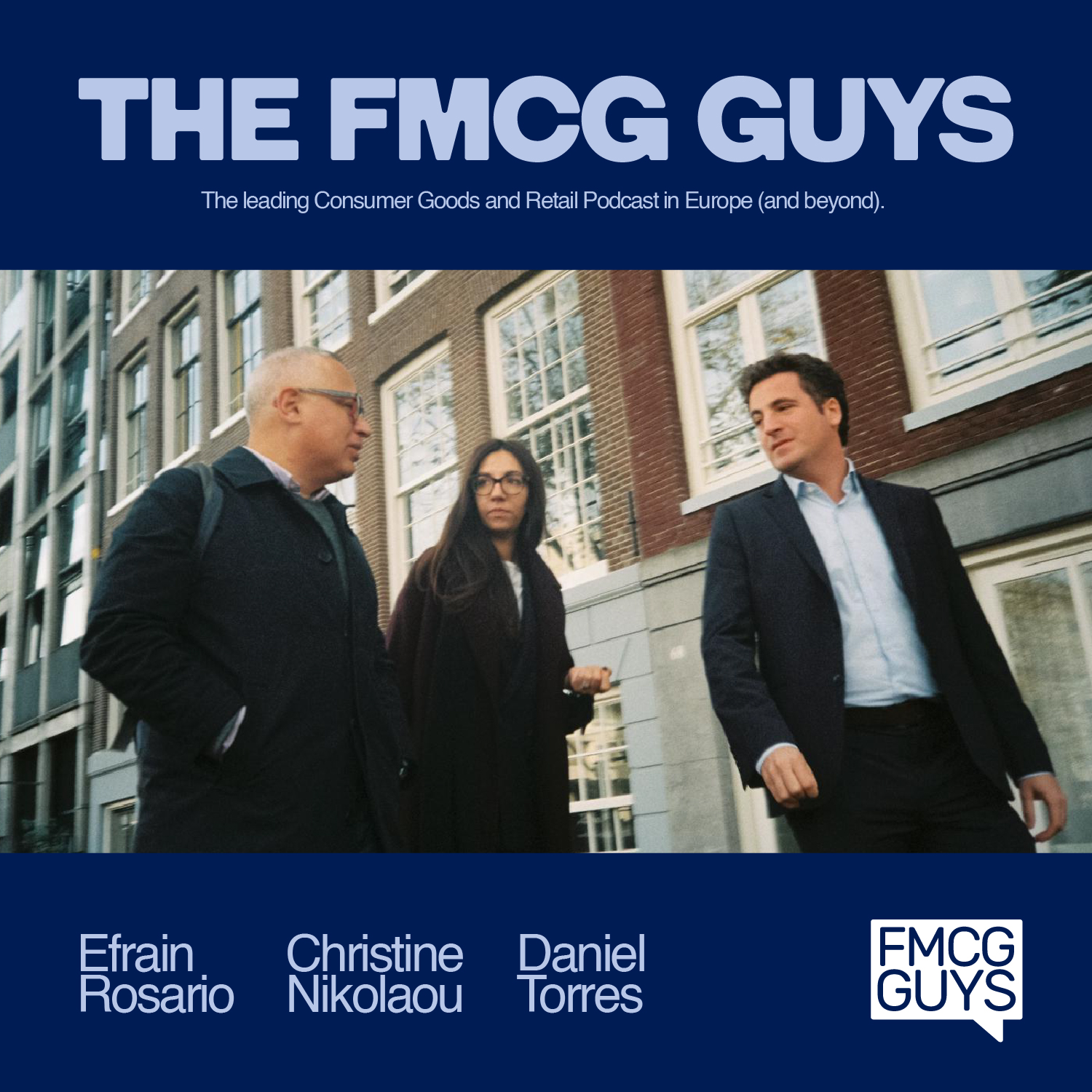
The FMCG Guys
Dwyer Partners
RETHINK RETAIL
RETHINK Retail
The Commerce Collective Podcast
Flywheel Digital
Future Shop Podcast with WSL
WSL Strategic Retail